



Time to read : 3 Minutes
How To Cut Food Costs
When I joined Compare Club to write about mortgages, savings and all things financial it was a bit of a wake-up call.
I mean, how can I write about all of this without taking it onboard and putting it into practice? After all I can't really ask you to be better with your money if I'm not asking the same of myself.
So what will this column be about?
My spend less and live more column and matching instagram account is how I plan on being accountable to you (and to me).
Each week I will take on a mission, and let you know how I go at it. I am literally going to try everything, from buying or making gifts, checking I am on the best green slip (did you know existing customers can get worse deals then new ones?! What?!) and basically anything that helps me save.
😱I had a 60K strata bill last year to repoint the whole building. And no, that wasn't for the building, it was for each unit. I paid it because I really had no choice... and it looks amazing – but now I want to rebuild my emergency fund, fast.
🏦 For me, I am looking to save $25K in the next 18-24 months (I believe in buffers) or $1200'ish a month while still paying my mortgage – which is where most of my money goes.
🚀 So here begins my year-long challenge – broken into little missions. How much can I save if I really put my mind to it?
I'll update you weekly on each challenge I take and then how much I've saved by the end of the month.
Mission #2 – cut my food costs
On average, Aussies spend $152 a week on groceries each week. That figure is set to rise though with inflation hitting our food bill hard – fruit and veges are up 16.9% this year alone.
I've been tracking my food spend all year. In the beginning I was spending about $240 a week, but have now got this down to $140, saving myself $100 a week (or $400 a month).
I did this by making some simple cost-effective changes:
The 10 ways I cut my grocery bill
Writing a shopping list to stop myself buying things I don't need.
Meal planning. I know that sounds boring, but it isn't at all. I tend to make three dishes a week and then alternate to keep it interesting.
Buying in season and local, I no longer lust after a mango that has travelled here from Mexico mid-winter.
Making soup and stir fry to use up what ever I have left at the end of the week stops food wastage – in Australia we throw out 7.6 million tonnes of it a year, or 312kg each. Not good. What I don't use up (except citrus, onions and anything spicy) goes to my worms in the compost.
I only eat out a few times a year. I am completely serious. I much prefer making my food from scratch whenever I can. I do this when I'm travelling too. I prefer to stay at a place with a kitted-out kitchen.
I cook in batches, and freeze for busy weeks or days where I am just feeling lazy. It's a proper lifesaver.
Eating plants. I have a predominately plant-based diet but even if you don't, just eating one day without meat saves you (and the planet) money. A family of four can save $70 a week by eating more flexibly too.
Ugly equals cheaper... and also stops waste. Did you know 25% of Australia's fruit and vegetables never leave the farm because they don't look pretty? Oh, and they are 50% less! I love the Harris Farm Imperfect Picks program and shop there weekly.
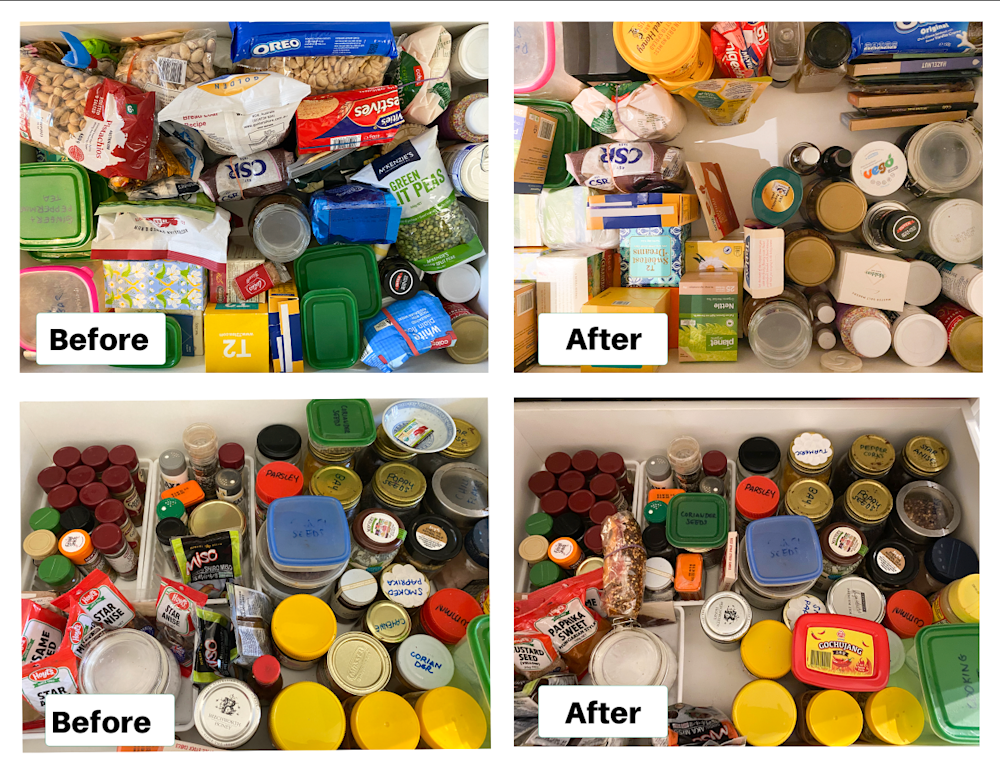
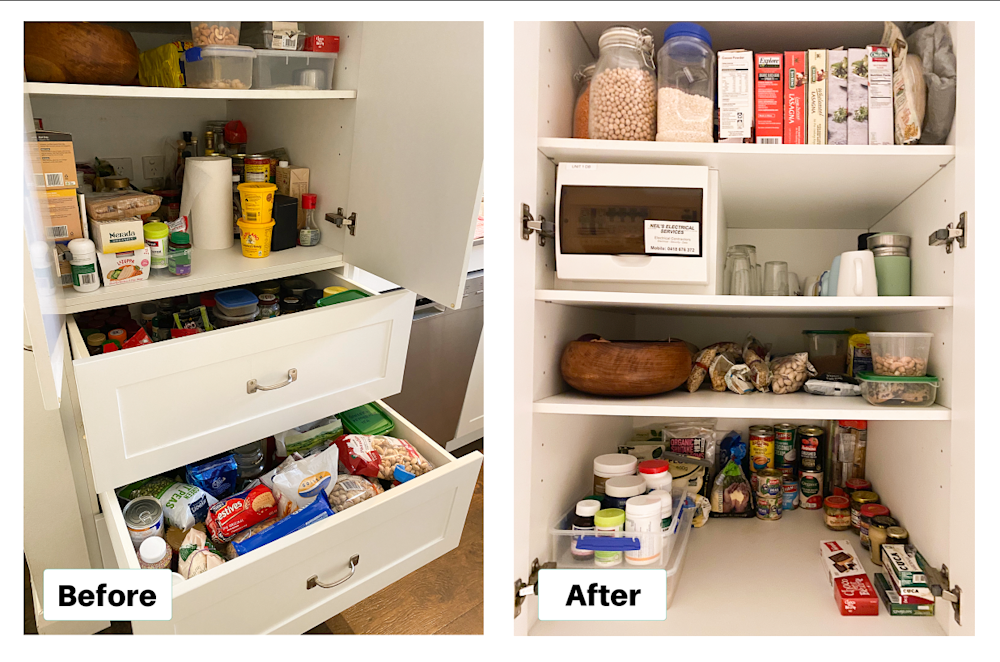
Shopping my cupboard and freezer – I did an audit this week and turns out that I've bought eight kilos of lentils in the past year. So I'll be feasting on yummy dahl, veggie burgers, curries, salads and soups for a while to come!
Hacking my left overs – I turn my roast veg into salad one day and soup the next.
I had $700 worth of groceries in my pantry this week
Or, enough food to last me for six weeks.
🤓 I like to think I have been efficient with my shopping and eating, but I think I can still be more efficient.
🫶To be honest, I think we all can.
🛒 Let me know how you go with your own food audit.
Yearly savings: $100 a week x 52 = $5,200.
🧳 Next week... I tackle my travel costs.


