



Time to read : 4 Minutes
Every five years, the official Census asks Australians where they live, what they do for work, and who they live with. It has never once asked what’s lurking in the medicine cabinet, when a “health kick” actually starts, or what someone would do first with $5 million. So Compare Club ran the unofficial version: a survey of 330 Australians on the small habits, household rituals and oddly specific decisions that reveal how people really live, week to week.
The results are a reassuring reminder that there is no such thing as an average Australian. One person’s Bunnings trip is a mission executed with military precision; another’s is a sausage sizzle with a hardware store attached. One household’s inbox sits at a tidy zero; another’s has quietly passed 10,000 unread emails and made peace with it. Read together, the answers sketch a country of small, stubborn individuality - and a decent case for why financial products shouldn’t come in one size either.
Key findings
Money dreams shift with age but housing remains key: with a $5 million lotto win, young Australians would buy a first home first, while those in their 30s and 40s would pay off the mortgage.
18-29 year olds are as likely to have 500+ unread emails (35%) as a tidy inbox (35%) - over-60s have largely managed to achieve a dream inbox-zero, with 63% sitting under 20.
Only 28% of Bunnings trips go entirely to plan; the sausage sizzle and the plant section have other ideas.
78% of Australians do most of their holiday packing in the final week - most of them the night before. Clearly “she’ll be right” holds true.
Chips narrowly beat the servo pie as the nation’s favourite road-trip snack.
Medicine cabinets are basically time capsules: think Panadol from 1990 and Sudocrem kept from kids who are now in their thirties.
Money dreams: what $5 million lotto win really buys
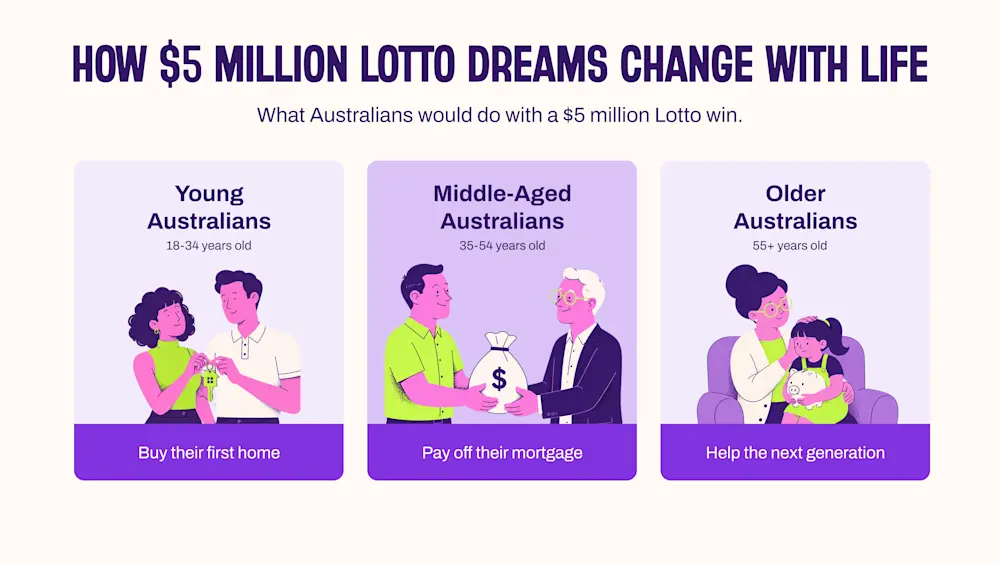
Ask Australians what they’d do first with $5 million, and unsurprisingly housing anchors the nation - younger respondents are chasing a first home, older ones are already mortgage-free or paying it down.The lean toward buying over paying down debt isn't just wishful thinking; it reflects a broader economic shift with homeownership rates for under-35s plummeting*, leaving many younger Aussies eager to secure an asset they haven't yet had the chance to access.
18-29: 38% would buy a home; 3% would pay off a mortgage
30-44: 25% would buy a home; 15% would pay off the mortgage
45-59: 17% would buy a home; 15% would pay off the mortgage
60+: 14% would buy a home; 8% would pay off the mortgage - 14% said they'd rather help their kids onto the property ladder instead
Not everyone had a plan ready to go. “Cry,” said one 18-29 year old, admirably concise. A respondent in their 30s or 40s would “buy a nice steak, then panic about what to do with it.” One person in their late 40s or 50s has had a bottle of Veuve sitting in the fridge for two years, apparently waiting for exactly this scenario, and would finally open it.
The great inbox divide
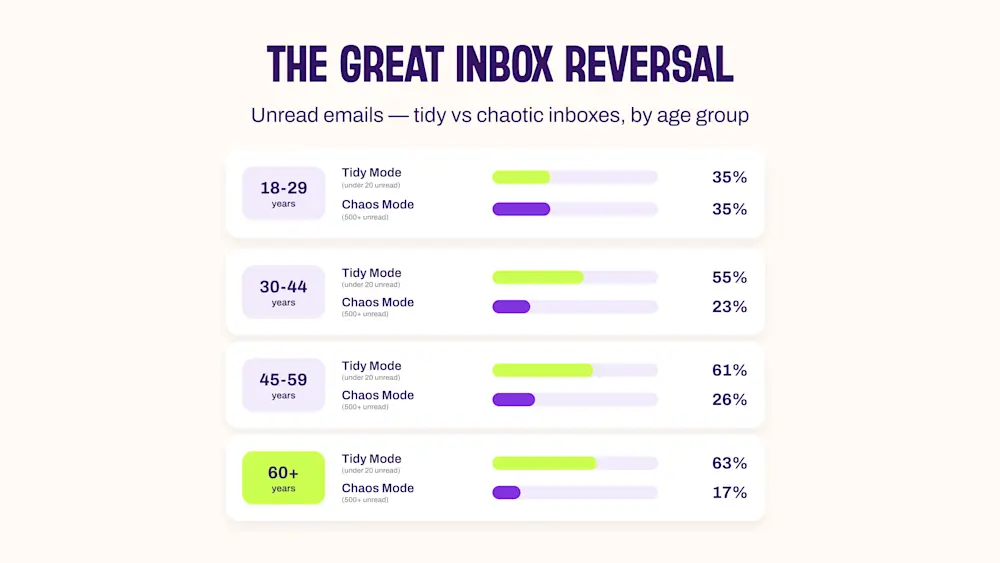
Nowhere is the generational gap clearer than the humble inbox. Younger Australians are split down the middle between chaos and control, while older generations settle firmly into calm.
18-29: an even split - 35% sit on 500+ unread emails, while another 35% keep theirs under 20
30-44: 55% keep a tidy inbox
45-59: 61% keep a tidy inbox
60+: 63% keep a tidy inbox, with only 17% reporting chaos
Somewhere out there, a small number of Australians are carrying more than 10,000 unread emails and have simply stopped counting.
The backlog isn’t limited to email: 41% of respondents juggle four or more paid subscriptions or memberships at once, part of a broader pile of life admin - Wills, superannuation consolidation, provider-switching - that everyone means to get to eventually.
Bunnings: the great Australian pilgrimage
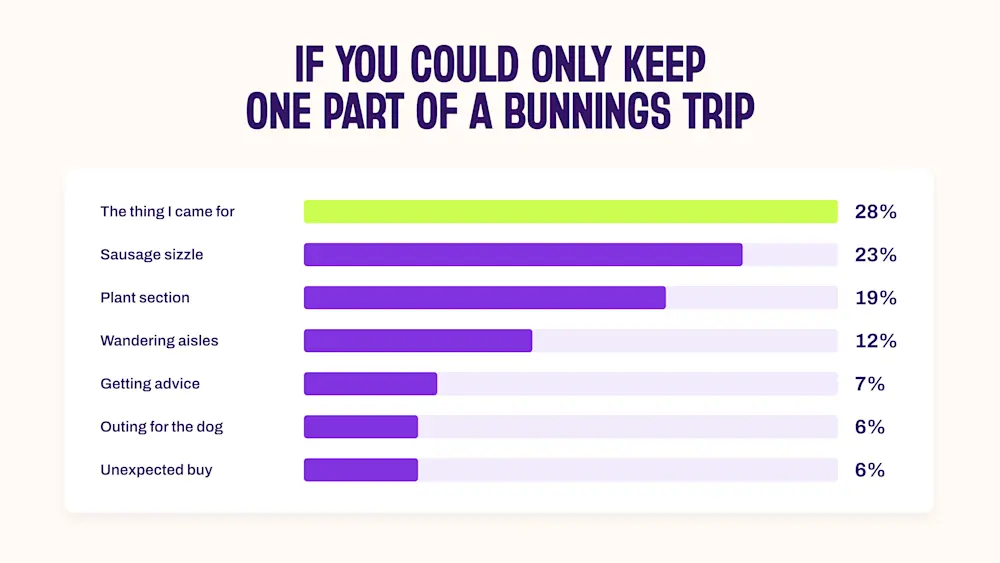
Australians don’t really go to Bunnings for one thing. Just 28% stick to the original mission - the rest scatter across a familiar set of detours:
Sausage sizzle: 23%
Plant section: 19%
Aimless wandering of the aisles: 12%
Unplanned purchases: 6%
Mostly just taking out the dog: 6%
It’s less a hardware run than a small pilgrimage with several stops.
Australians are just as varied in how they spend their weekends. Despite Australia’s sporting reputation, nearly one in three say they wouldn’t rearrange their day to watch any sport. AFL remains the biggest drawcard at 19% followed by NRL at 12% but for many, other commitments come first. However, one respondent’s $5 million plan was simply to “be in Brazil for the Women’s World Cup,” arguably one of the more decisive uses of a Tuesday.
The medicine cabinet time capsule
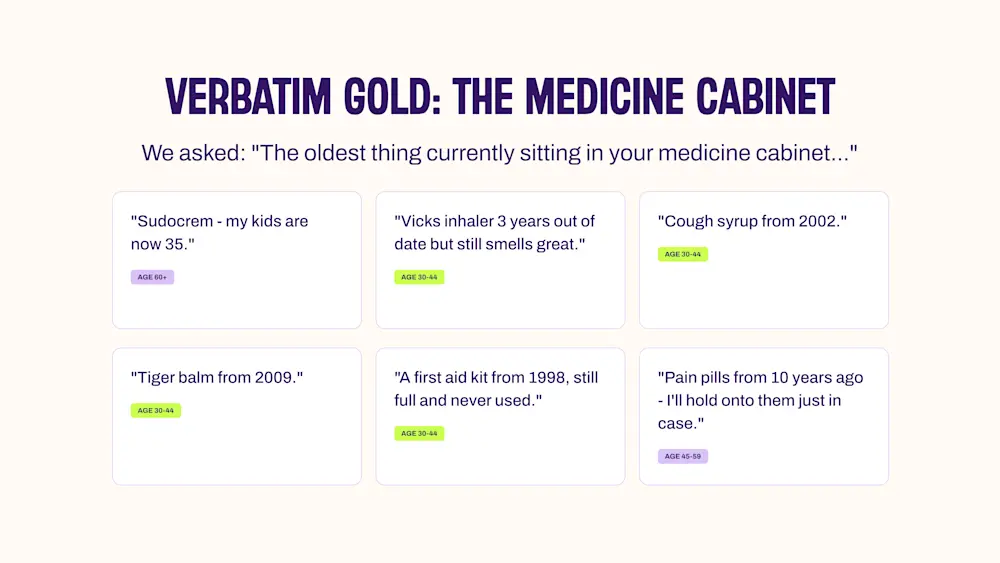
Ask Australians about the oldest thing in their medicine cabinet and the answers read like archaeology. “Panadol from 1990.” “Sudocrem - my kids are now 35.” Beard oil from 2015, “a strange Christmas gift, as I don’t have a beard.” A Vicks inhaler three years out of date but “still smells great.” Cough syrup from 2002. Tiger balm from 2009. A first aid kit from 1998, still full, never opened. And, more cautiously: pain pills from a decade ago, kept “just in case.”
The cabinet’s contents make more sense once you see how Australians treat health kicks generally. Only 14% start one “today” - most (26%) wait for motivation to strike, whenever that is, and one in five don’t really do them at all. Gym memberships tell a similar story: Half of Australians (50%) have paid for a gym membership they didn’t use, and 19% kept paying for more than seven months before admitting defeat.
Going places: how (and when) Australia packs
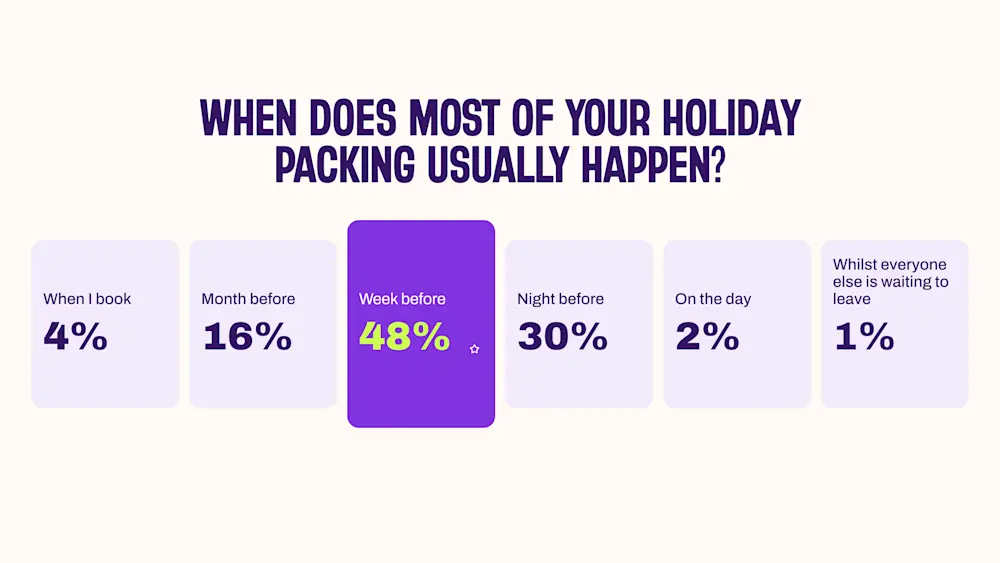
Holiday packing splits the country into two tribes, and one is much larger than the other. 78% of Australians do most of their packing in the final week before a trip - 48% the week before, 30% the night before - while a stoic 4% start the moment they book. A rare 1% pack whilst everyone else is waiting to leave, which feels less like planning and more like a lifestyle choice.
The road-trip snack debate is settled, narrowly: chips take it on 24%, just ahead of the classic pie or sausage roll (19%), lollies (17%) and chocolate (12%). Eleven per cent prefer to gamble on whatever looks good at the servo, which is its own kind of bravery.
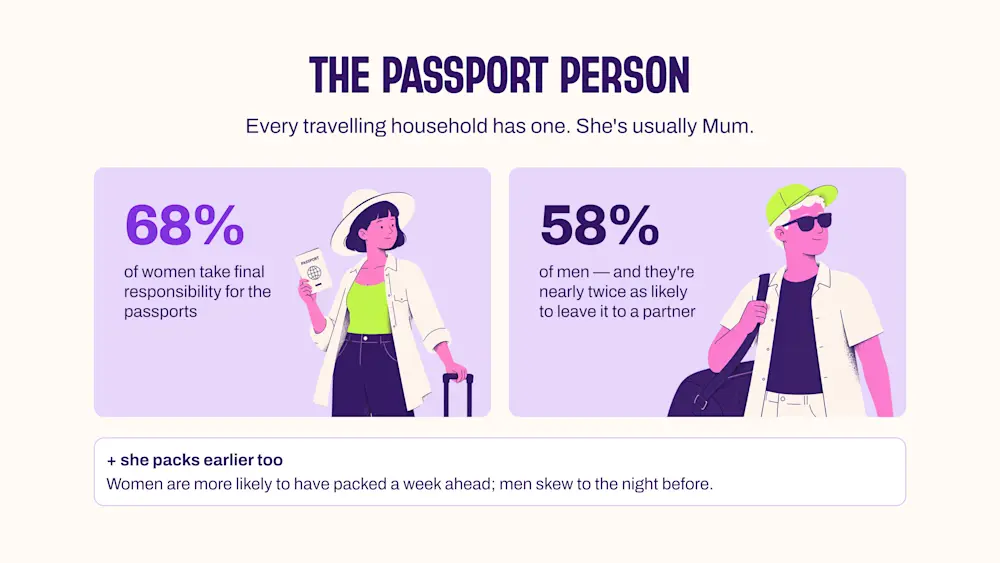
Packing responsibility also skews by gender in this sample: 68% of women say they’re the one who ultimately takes charge of the passports, versus 58% of men - and men are roughly twice as likely to hand the job to a partner altogether. Women tend to start earlier too, with 53% packing a week ahead compared with 40% of men.
Home truths: the clutter, the lights and the cables
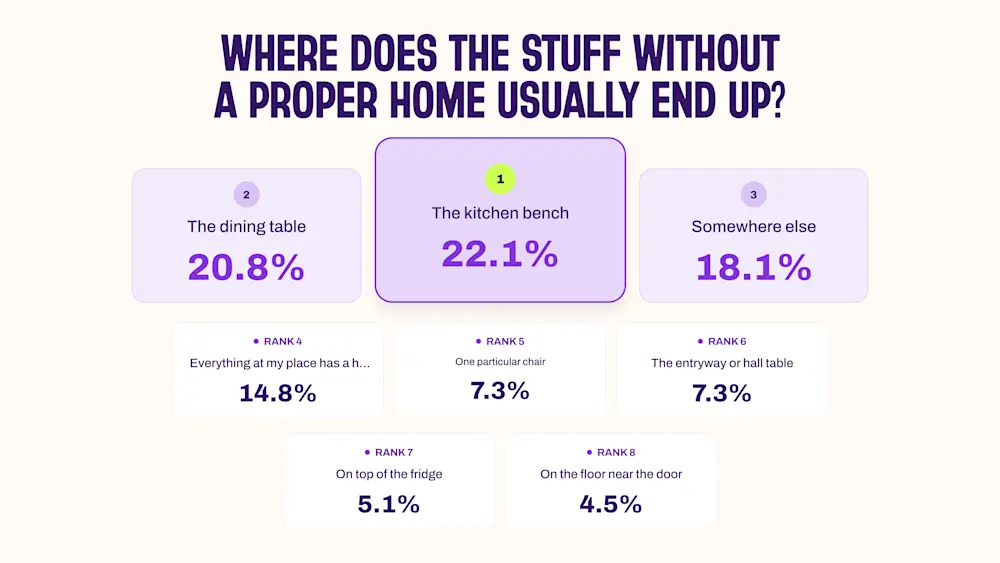
Every home has a place where things go to be dealt with later. We’re leaning towards the kitchen - for 22% the kitchen bench and 21%, the dining table; 7% have narrowed it down to one particular chair. Only 15% claim everything already has a home, which either means they’re extremely organised or wildly optimistic.
Christmas lights are similarly unhurried: 34% take them down in the first week of January, 10% stretch it out to Australia Day, and 5% simply leave them up all year, reframing “Christmas lights” as “outdoor lighting.”
Cable drawers tell a similar story of hoarding: 32% admit to keeping most of their old cables they can’t identify. And when it comes to reusable shopping bags, 90% of Australians own at least six - including a committed 9% who own more than forty.
What the Census can’t capture
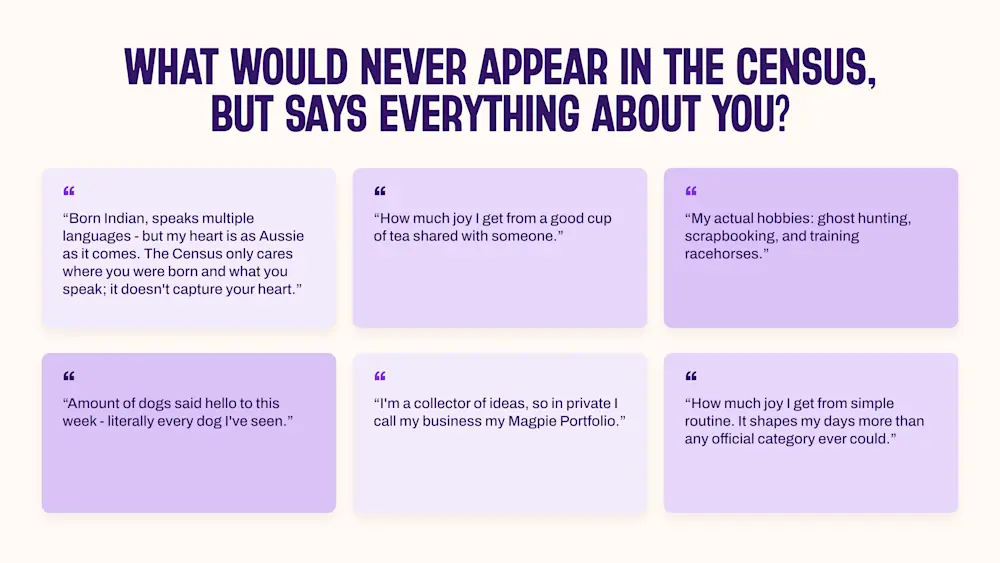
Some answers resist any theme at all, which is rather the point. Asked about what would never appear in the Census but says everything about them, one respondent’s list ran: “ghost hunting, scrapbooking, and training racehorses.” Another quietly runs a side hustle they've nicknamed their "Magpie Portfolio," while a third measures a good week purely in "the amount of dogs said hello to - literally every dog I've seen."
Conclusion
Even sharing a postcode, an age bracket or a surname, Australians turn out to be a little bit incomparable - one person’s tidy inbox is another’s inbox apocalypse, one person’s Bunnings trip is a mission and another’s is a sausage sizzle with extras. It’s exactly the reason one-size-fits-all doesn’t really work for financial products either, and why understanding people beyond the obvious matters.
Methodology
These are results from an online survey of 330 Australians, fielded in July 2026 and commissioned by Compare Club. Respondents were nationally spread across age, gender, state and household type, though the sample currently skews slightly female (55%) and older (73% aged 30 and above), so figures are best read as directional insight into everyday habits rather than published national statistics. Percentages are rounded and may not always sum to 100.
*Source: Australian Institute of Health and Welfare census data


