


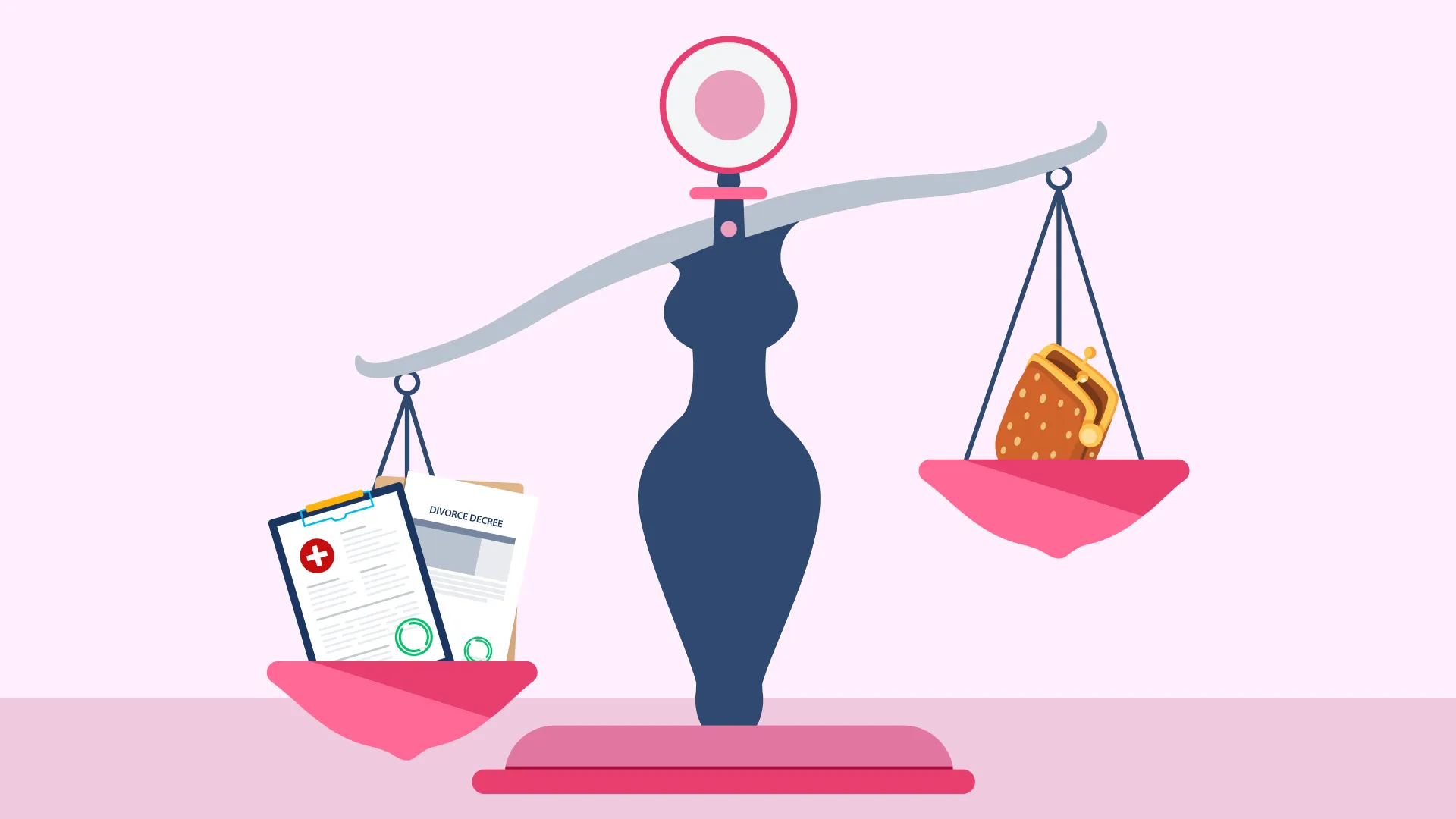
It’s now five years ago that I – mercifully – beat breast cancer.
And one wildly unexpected outcome was that it taught me five things about money even I, as a money expert, hadn’t appreciated.
Here they are, in reverse order.
5. Be gentler on yourself
I used to live by a huge amount of self-discipline… think fitness and food, and – of course – spending and saving/investing.
But even about money – both my occupation and my fixation – I’ve now relaxed a bit and struck a better balance.
My new money mantras are: Moderation NOT deprivation… and restraint AND rewards (and HELLO chocolate!).
I also love the 80:20 philosophy of noble to naughty when it comes to both health and wealth.
This stipulates – as it suggests – that if you, say, eat well and exercise 80 percent of the time, you can indulge a little in the remaining 20 percent.
Equally, I find it a great money-management framework to decide how much of your surplus income to be responsible and good with… and with how much it’s totally okay to treat yourself!
4. Get and keep the best private health - and income protection - cover
We all have busy lives but – if it gives you the necessary motivation – realise that ‘self'-care in the form of your routine medical checks is not just for you, but for all the people who love you as well.
Early detection is everything when it comes to many health conditions, including cancer.
But so, too, is having the right protection in place if your results don’t come out well.
Private health insurance premiums might be going up an average of 4.41 percent on April 1, but I credit it with saving my life.
How?
Having private health insurance meant I had a lot more choice about my treatment. Breast cancer is not a one-size-fits-all cancer, nor is it a one-size-fits-all treatment path.
In my case, if I had chosen to go through the public health system, I would have likely had to have a lumpectomy, followed by radiation and then take hormone blockers for the next 10 years.
For me, with a slight frame, I wasn’t keen on the radiation… anecdotally, it can have ill-effects for smaller people. And it’s logical that I wanted to avoid hormone blockers if at all possible. But I was also adamant that I didn’t want ongoing worry about my cancer returning.
Going private gave me another option that made sense for me - which was an immediate double mastectomy and reconstruction to remove my future risk (and avoid radiation and hormone blockers).
This option would not have been available for me without private cover.
So, I understand the coming premium increase may have you thinking about dropping your cover entirely, but I urge you to reconsider and instead get it reviewed, with a mind towards switching to a better deal.
Because it’s very possible you could cut the price of your private health premiums, rather than wear that coming increase… with a simple switch.
In fact, I can almost guarantee there are policies out there that will give you enlarged coverage at a lower cost. The average saving from a switch is $300 a year, while there are people out there who have cut their health cover costs by as much as $5000.
Don’t miss that there is no downside to switching either: you do not have to re-serve waiting periods for services for which you have already qualified.
Realise also this: Health is wealth and your monetary security can disappear quickly if something in your body deteriorates, and you’re unable to work.
Income protection insurance is your other key ingredient to financially weathering bad health news.
You can opt for a longer waiting period to reduce its (hefty but tax deductible) price.
But this is where there’s another crucial move you must make…
3. What I call a ‘Holy Shit’ fund saves your life – at least, your financial life
Getting sick can get expensive and the last thing you want is to amass credit card or other debt and add financial stress to, often, emotional stress.
If you don’t have one, start to slowly and resolutely build an anxiety-cutting emergency buffer… or what I call a Holy Shit fund, for if/when ‘shit’ goes wrong.
Now it’s this emergency buffer that can allow you to opt for a longer income protection waiting period – you can use it to cover your costs in the interim.
So, ideally, that’s (at least) how much you should have: an amount sufficient to replace your income for the exact waiting period.
And, if you have a mortgage, in the meantime you can use this to slash your interest and time in debt by housing it in an offset account that runs alongside of your home loan. If you don’t, a high-interest savings account will let you maximise this money.
2. Think how your life would look to you, if you looked back
Life is long… but – sorry! – it can also be unexpectedly short.
How do you want to live it? If you had few breaths left, how would you look back at your decisions, situation and happiness?
And if you were taking that last breath, would your family be looked after with the right life insurance?
If you have dependents, this is a nudge to make sure you have enough to raise them to adulthood and clear your debts.
There is another type of insurance that often comes with life insurance as well: total and permanent disability.
I know it sounds grim but this is important if you are unfortunate enough to get really injured or become so terribly ill that you can’t perform some of the functions of daily living.
What’s known as TPD insurance will pay you an agreed lump sum, sometimes half the amount of the companion life insurance. So if you take out life insurance of $600,000, you might also get TPD of $300,000.
Life cover and TPD insurance, as well as income protection insurance, can be indexed for inflation.
The good thing is that life cover and TPD insurance are not even that expensive… and the potential value is enormous.
Which brings me to the No.1 thing that breast cancer – and now being five years clear of it – taught me.
1. Dance more.
Cover charges… concerts… they are worth the cost. I love seeing a live band, you can’t keep me away from a house music DJ set and I am determined to next take up Salsa dancing.
Indeed, there is a whole body of research https://pmc.ncbi.nlm.nih.gov/articles/PMC11659422/ that says that money can buy you happiness, but only if you spend it on experiences not on ‘stuff’.
The logic - borne out - is that we derive greater and greater lasting satisfaction from lifestyle boosts than from material things.
Dancing, for me, is one of the best experiences – it’s the ‘stuff’ of joy. Even if it’s just for free in my kitchen.
If you don’t have an equivalent, maybe find one. And do it more!


