



Australians under pressure
There is no doubt for many Australians the cost of living is still biting. We surveyed 1,000 people across the nation to ask how Australians are feeling about their finances right now, where household pressure is biting hardest, and how people say they would respond if living costs climb further.
Our recent findings point to a public that is still highly cost conscious, deeply alert to everyday bill pressure and increasingly open to practical savings actions. That creates a strong story for both consumers and journalists: many households are feeling stretched, but there are still levers people can pull on major bills to create breathing room.
The survey identified these key pressure points.
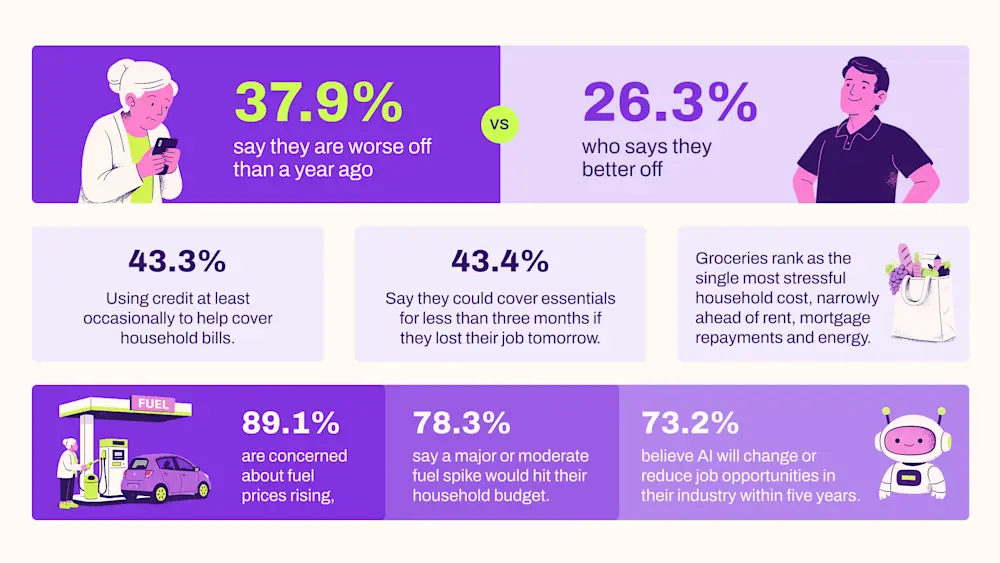
37.9% say they are worse off than a year ago, versus 26.3% who say they are better off.
43.3% are using credit at least occasionally to help cover household bills
43.4% say they could cover essentials for less than three months if they lost their job tomorrow.
Groceries rank as the single most stressful household cost, narrowly ahead of rent, mortgage repayments and energy.
89.1% are concerned about fuel prices rising, and 78.3% say a major or moderate fuel spike would hit their household budget.
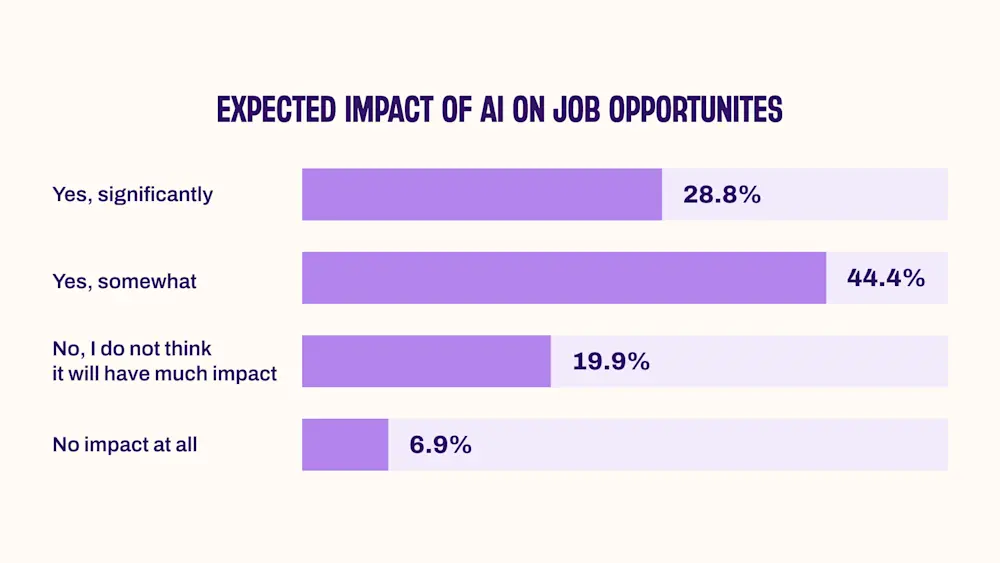
73.2% believe AI will change or reduce job opportunities in their industry within five years.
Financial wellbeing is still fragile
Overall our research shows that financial resilience is far less robust than it was a year ago.
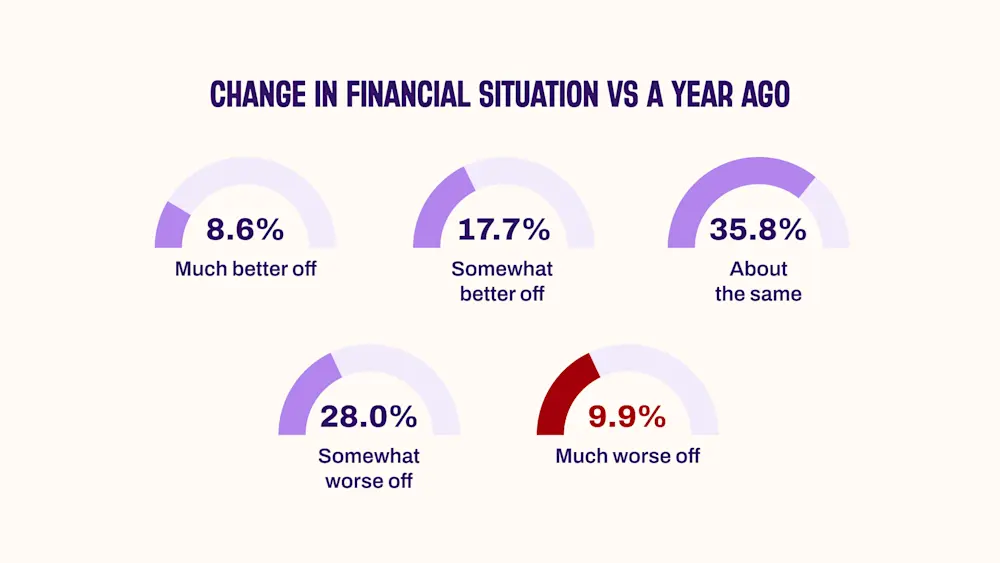
More than one in three respondents say they are worse off than they were at the same time last year, while only around one in four say they are better off. The largest single group says they feel about the same, which suggests many households are not in freefall but are still failing to move forward.
The data on emergency savings reinforces the same point. If they lost their job tomorrow, 43.4% say their household could cover essential living costs for less than three months. That is a significant warning sign for a consumer economy where bills remain elevated and savings have been depleted for many families.
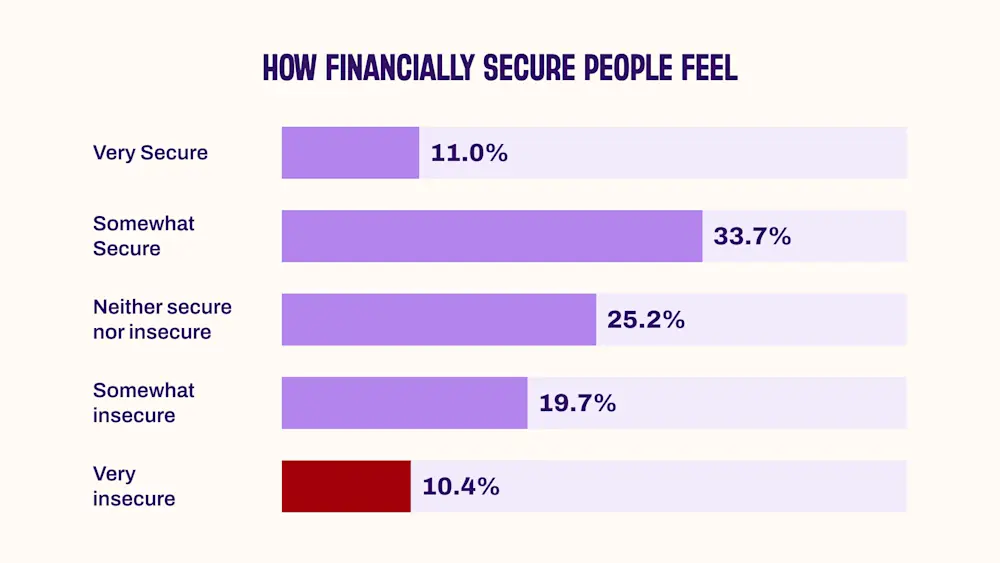
Another notable signal is the role of credit. More than four in ten respondents say they are relying on credit regularly or occasionally to help pay household bills. That suggests cost pressure is not just changing consumer sentiment, but in many cases changing behaviour.
Everyday bills are the real pressure point
When asked which bill is causing the most financial stress, groceries came out on top at 24.5%. That reflects how visible and frequent food costs are in day-to-day life. But the story is broader than supermarket spending alone. Rent, mortgage repayments and energy bills all sit clustered close behind, showing that pressure is spread across the core pillars of household budgeting.
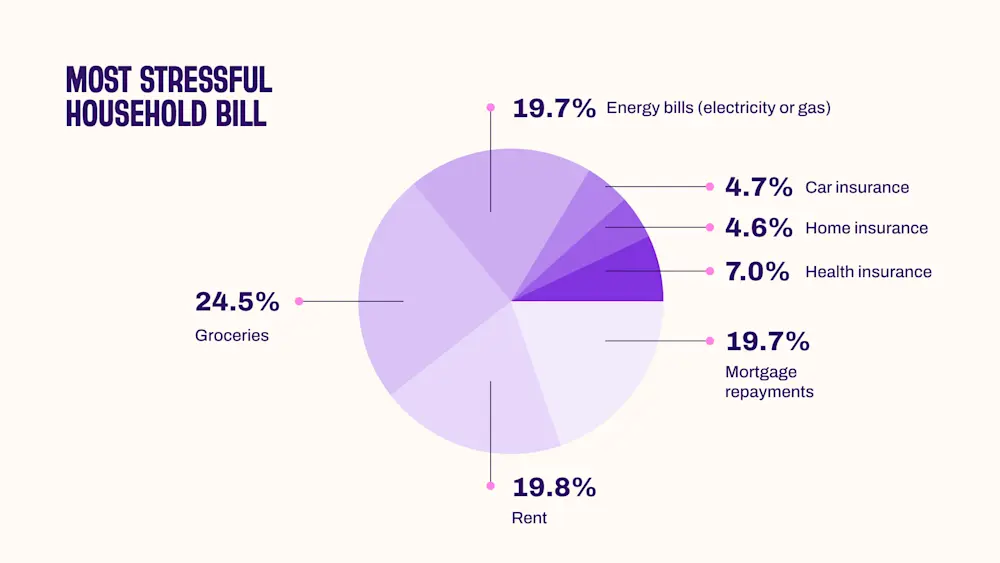
For Australian consumers this matters because it reinforces a core truth: people may not be able to change every cost quickly, but they are highly sensitive to any bill that feels movable. Mortgage rates, rent and grocery inflation can feel hard to control. Energy, health insurance and other cover types are different because they can often be reviewed, compared and switched.
Fuel remains a major anxiety trigger
Fuel has the power to amplify cost-of-living stress because it reaches beyond the bowser. It affects commuting, school runs, leisure spending and, indirectly, the cost of goods and services more broadly. In this survey, 89.1% say they are concerned about petrol and diesel prices rising in the coming months.
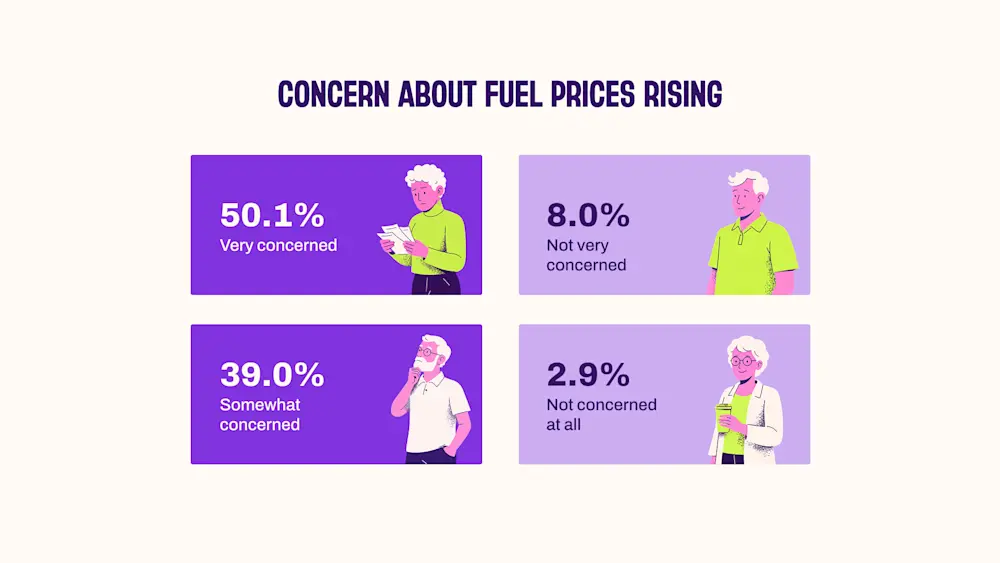
This concern is not just theoretical. A further 78.3% say that if fuel prices rose significantly, the impact on their household budget would be major or moderate. This is exactly the kind of issue that can sharpen media interest because it links global events to immediate kitchen-table consequences.
Households are already planning what they would cut
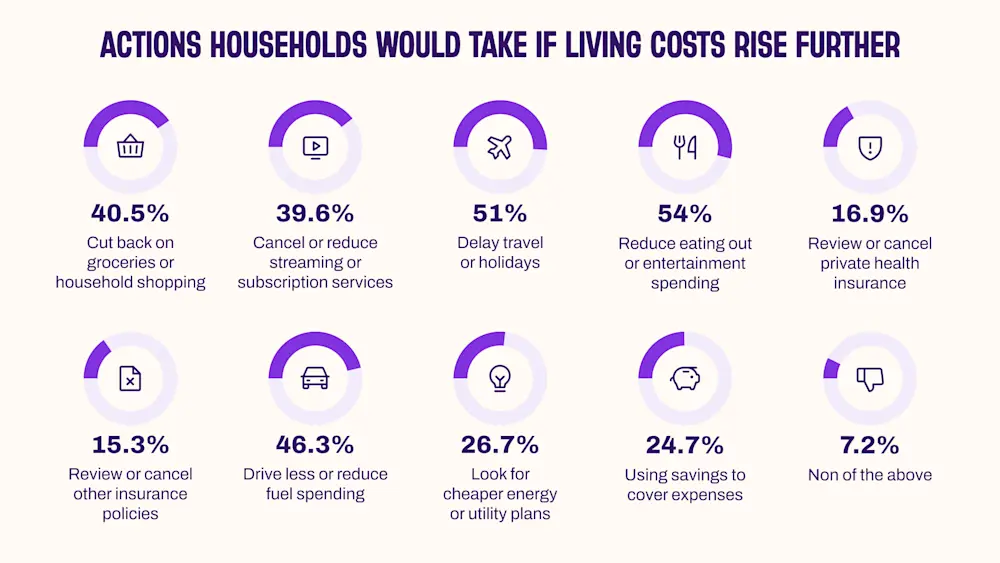
The most common spending responses are lifestyle trims rather than full-scale retreat. More than half say they would reduce eating out or entertainment spending, and 51.0% would delay travel or holidays. Nearly half say they would drive less or reduce fuel spending, while 40.5% would cut back on groceries or household shopping.
AI is adding another layer of financial unease
The research suggests financial stress is not only about today’s bills. It is also about what people think the next few years may bring. Nearly three quarters of respondents say AI will significantly or somewhat change or reduce job opportunities in their industry within the next five years.
How does this relate to the household budget? Job insecurity can shape consumer behaviour before any income loss even happens. When people fear future disruption, they become more cautious, delay discretionary spending and seek more value from recurring bills. Methodology and sample notes
This report is based on a survey of 1,000 Australians on independent platform SightX. The sample profile in the dataset includes a broad spread of ages, states, income bands and household types. In the screening question, 96.2% said they were responsible for paying at least one household bill such as rent, mortgage, utilities, groceries, insurance or subscriptions.


