



Australian families are no longer just cutting back on their Friday night takeaway or skipping a holiday to save money, they are now cutting into the fabric of everyday family life.
The latest research from Compare Club shows the cost-of-living crisis is now forcing parents to make difficult decisions that are changing how their children grow up, how families spend time together, and how parents feel about what they can provide at home. From pulling children out of sport and saying no to birthday parties, to more tension at home and growing parental guilt, financial pressure is now shaping the emotional experience of family life as much as the household budget.
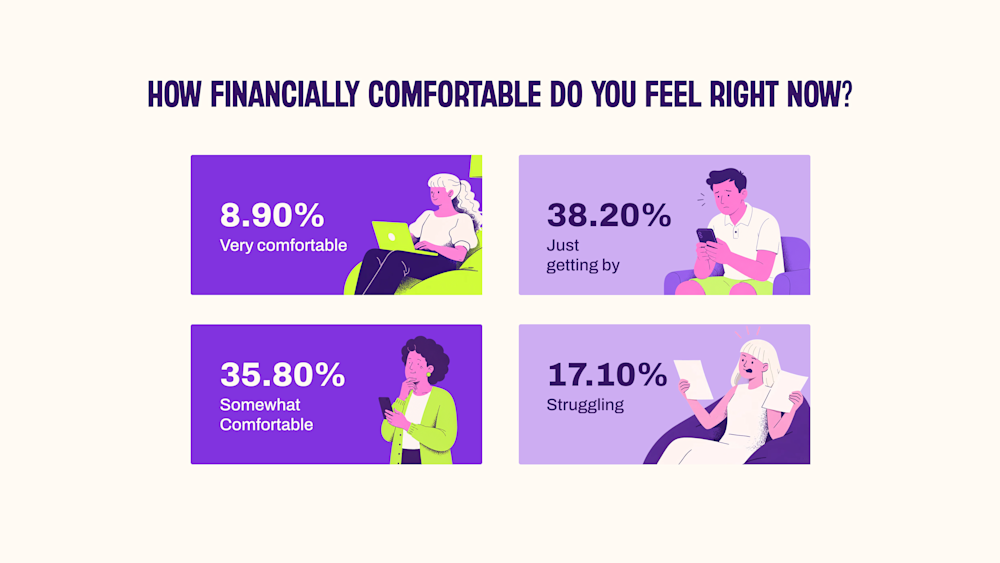
Based on a nationally representative survey of 1,000 Australian parents with children under 18 undertaken in May 2026 the findings reveal a growing cohort of families being forced to scale back the everyday experiences many would have once considered part of a normal childhood. This follows a broader trend in Compare Club’s cost-of-living research, which has consistently shown parents are among the groups under the most financial strain. Cost pressure is now near universal for Australian families.
More than nine in ten parents say their cost of living has increased over the past 12 months, including 57.8% who say it has increased significantly and 35.3% who say it has increased slightly. Just 4.3% say their costs have stayed the same, while only 2.6% say they have decreased.
That pressure is not easing. More than eight in ten parents expect they will need to cut back further over the next six months, with 31.8% expecting to cut back significantly and 52.4% expecting to cut back slightly.
What’s notable however is that families are moving beyond the usual discretionary belt-tightening tactic but has really now starting to cut into family activities that were once considered a given for most Australian children.
Classic childhood experiences are now being cut back
One of the clearest signs of financial strain is what families are now removing from their children’s lives.
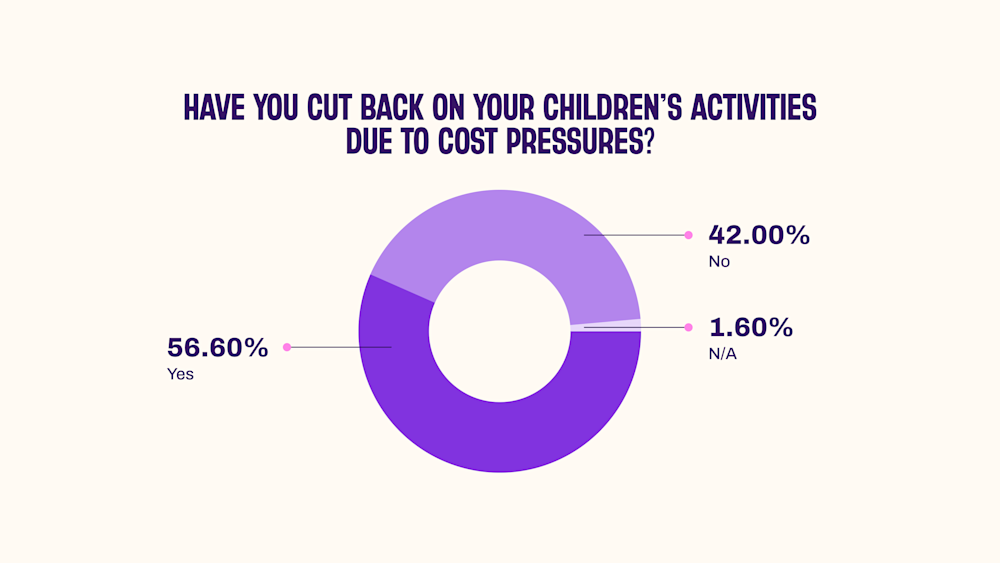
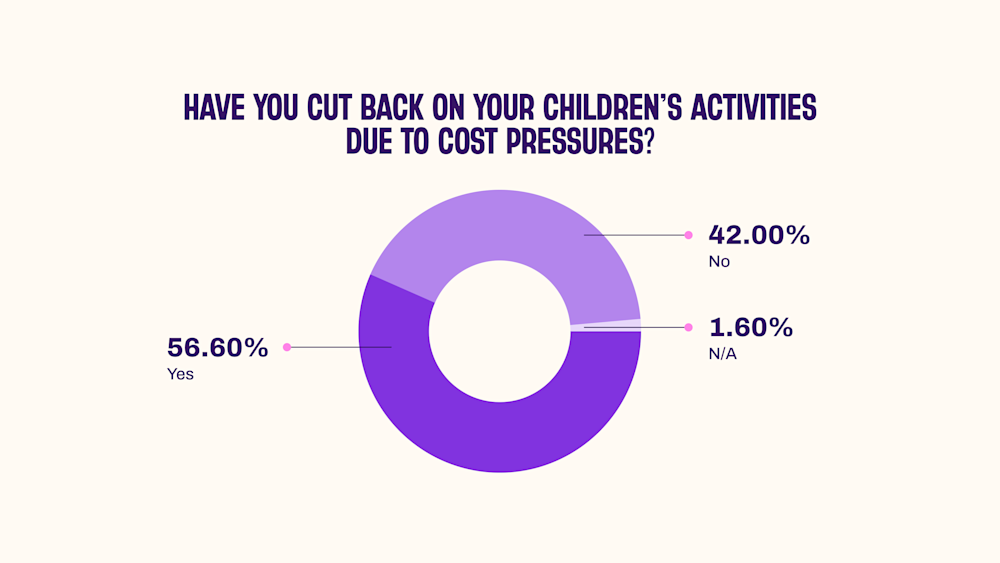
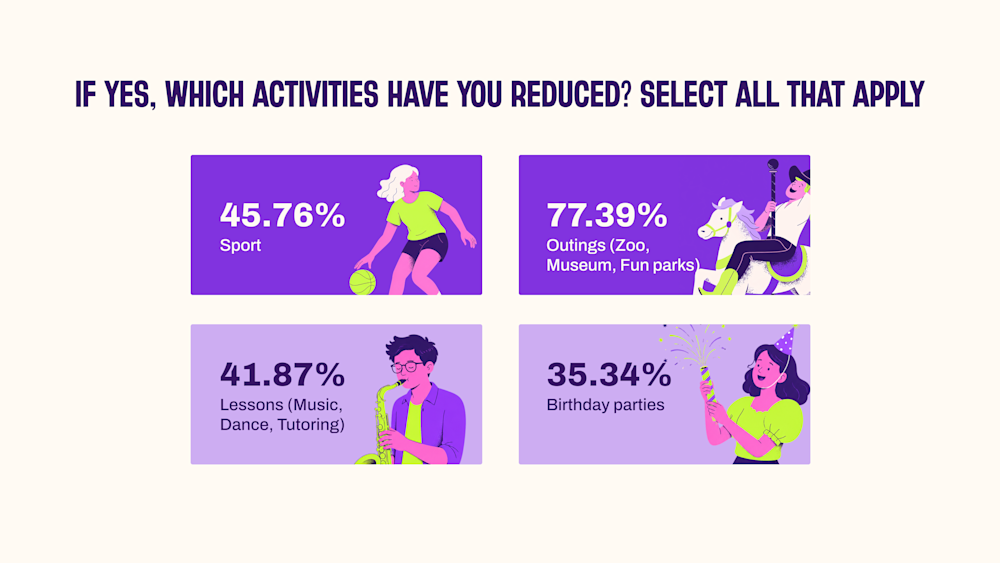
More than half of parents (56.6%) say they have cut back on their children’s activities due to cost pressures. Our data revels that some of the first things to go are often the experiences that shape childhood outside the home:
Outings like the zoo, museum or fun parks (77.4%)
Kids’ sport (45.8%)
Music, dance or tutoring (41.9%)
Birthday parties (35.3%)
These are not luxury expenses. Sport helps children stay active, healthy and socially connected, while music and creative activities can support confidence, emotional expression and learning. Outings and celebrating birthdays are also important parts of childhood development and wellbeing, and shouldn’t be seen as optional extras.
Parents are carrying the emotional cost
Financial stress is not only changing what families can afford it's also changing how parents feel and how they behave.
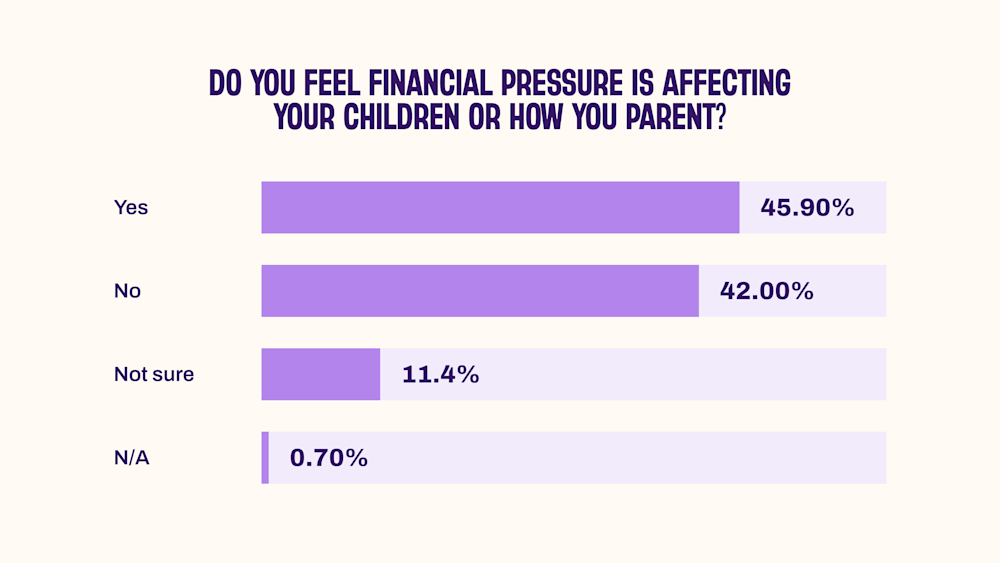
Nearly half of parents (45.9%) say financial pressure is affecting their children or the way they parent.
Among those parents:
71.0% say they are saying no to activities or experiences more often
67.8% say they feel guilt or stress as a parent
58.6% say they are talking more about money at home
44.9% say their children are missing out compared to their peers
This points to a broader shift in how financial stress is being absorbed by families and it is shaping parenting decisions, family conversations and how their children experience everyday life.
Money stress is straining relationships at home
Financial pressure is also placing visible strain on relationships inside the home.
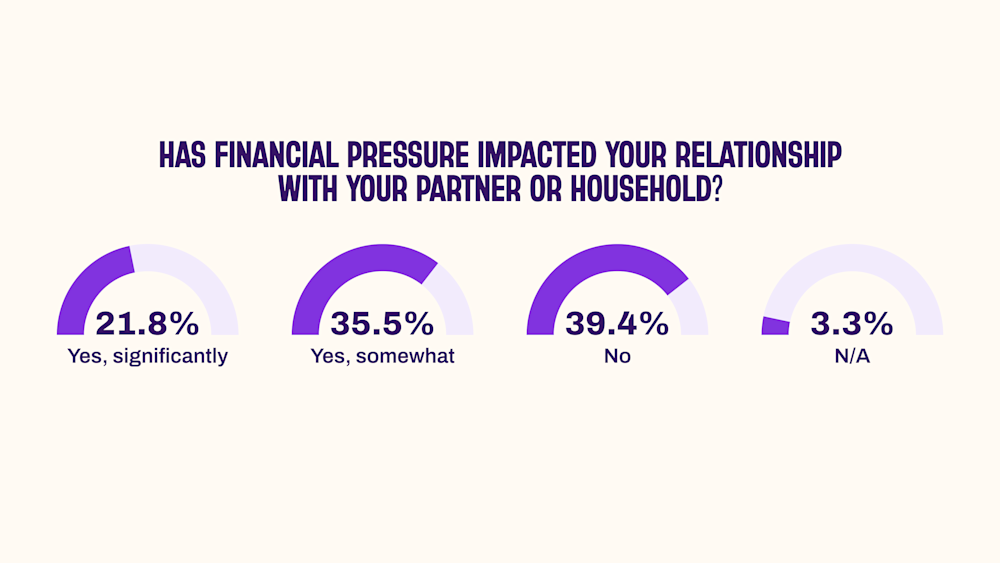
More than half of parents (57.3%) say financial pressure has had a negative impact on their relationship with their partner or household.
Among those affected:
68.8% report more stress or tension at home
51.0% say they are having more arguments about money
42.1% say they are spending less quality time together
This highlights how cost pressure is not just affecting what families buy, but how they relate to one another. When financial stress becomes constant, it often shows up in tension, conflict and reduced time together.
Childcare costs are also changing work decisions
For working families, childcare is adding another layer of financial strain.
Almost four in ten parents say childcare costs have increased over the past year, including 28.6% who say costs increased slightly and 11.2% who say they increased significantly.
Nearly one in three parents (31.4%) say the cost of childcare has influenced their work decisions.
This is a significant flow-on effect. Rising family costs are not only changing household spending, they are also influencing workforce participation and earning capacity.
Families are under pressure, but many are not switching to save
Despite the pressure, many families are still not taking action on the major household bills most likely to offer meaningful savings.
Almost four in ten parents (39.8%) have not compared or switched a single major household bill in the past 12 months.
This matters because the bills families are most likely to review, such as energy, home loans and insurance, are often the ones where the biggest savings can be found. Compare Club’s broader bill stress research has consistently found many households are cutting back on essentials while still missing opportunities to save on major recurring bills.
While parents are cutting children’s sport, skipping outings and saying no to birthday parties, many may still be overpaying on the household bills that matter most.
For families under pressure, that is one of the clearest opportunities for relief. The cost-of-living crisis is changing more than budgets
The financial pressure facing Australian families is no longer just about higher grocery bills or fewer treats now, it's reshaping routines, relationships and the experience of raising children.
Parents are cutting back on childhood activities, carrying guilt about what they can no longer provide, and absorbing the strain in their relationships and daily routines.
The cost-of-living crisis is no longer only showing up in household budgets. It is showing up in the lives families are able to give their children.


