



For many Australians, the End of Financial Year has become much more than an annual tax obligation. It has evolved into a financial checkpoint, prompting households to review their spending, reassess major bills and search for new ways to stretch their budgets.
Compare Club’s latest nationally representative survey of 1,000 Australians reveals that tax time is increasingly viewed as an opportunity to improve financial wellbeing. Australians are embracing new technologies such as artificial intelligence to better understand the tax system, while also recognising the importance of reviewing household expenses, reducing debt and planning for the future.
However, the research also highlights several areas where Australians continue to face uncertainty. Many believe they have previously missed legitimate tax deductions, almost half say their annual tax refund is essential to their household finances, and relatively few are taking advantage of strategies that could improve their long-term financial position, such as voluntary superannuation contributions.
The findings paint a picture of Australians who are engaged with their finances, but who are also navigating increasing complexity. Whether it is understanding tax deductions, deciding whether to trust AI or reviewing household bills.
Key findings:
• Nearly every Australian (99%) intends to lodge a tax return this financial year.
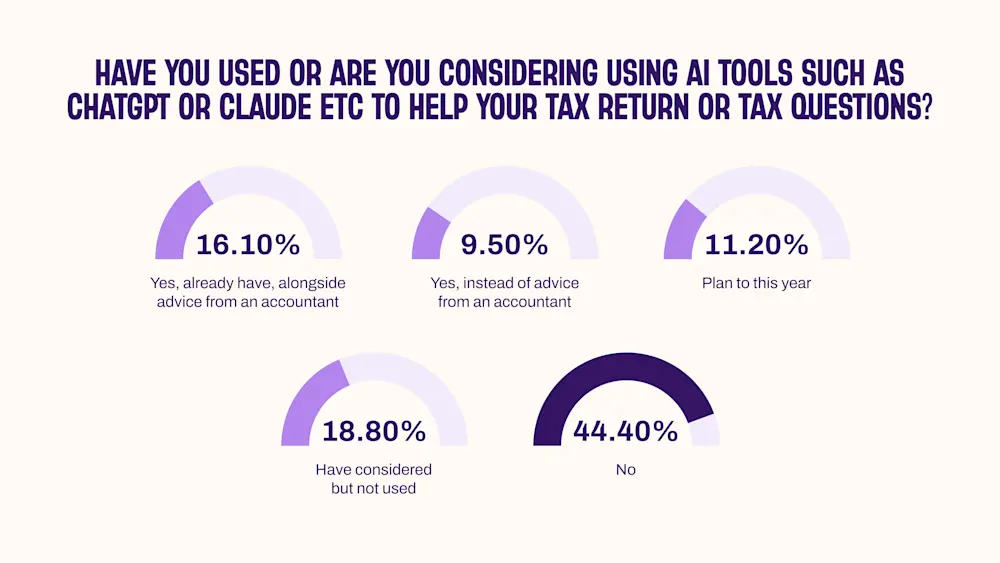
• More than half (56%) have used or are considering using AI tools such as ChatGPT to help answer tax questions.
• Accuracy is the biggest concern preventing wider AI adoption, nominated by one in three Australians (33%).
• Nearly half (44%) believe they have previously missed legitimate tax deductions.
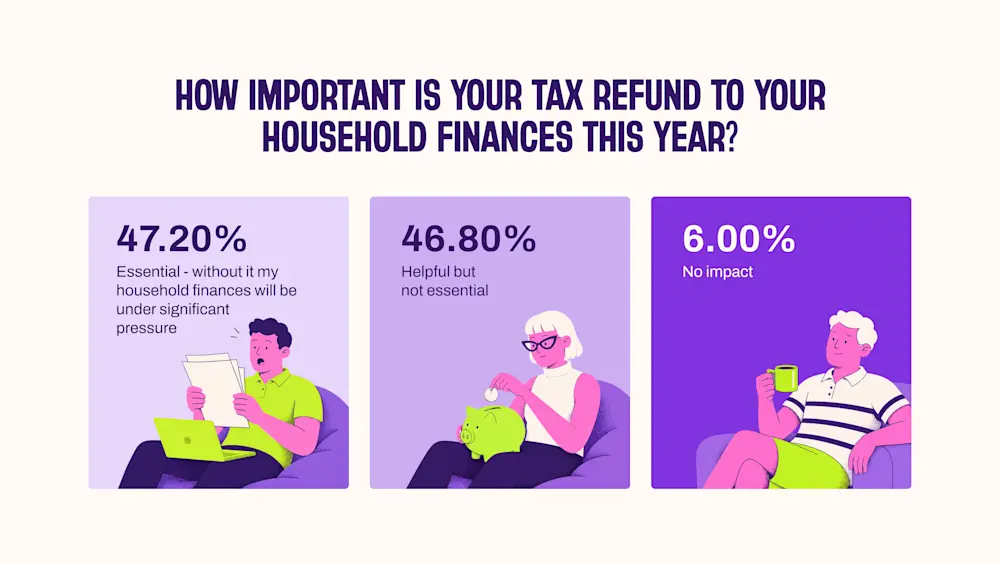
• Almost half (47%) say their tax refund is essential to their household finances this year.
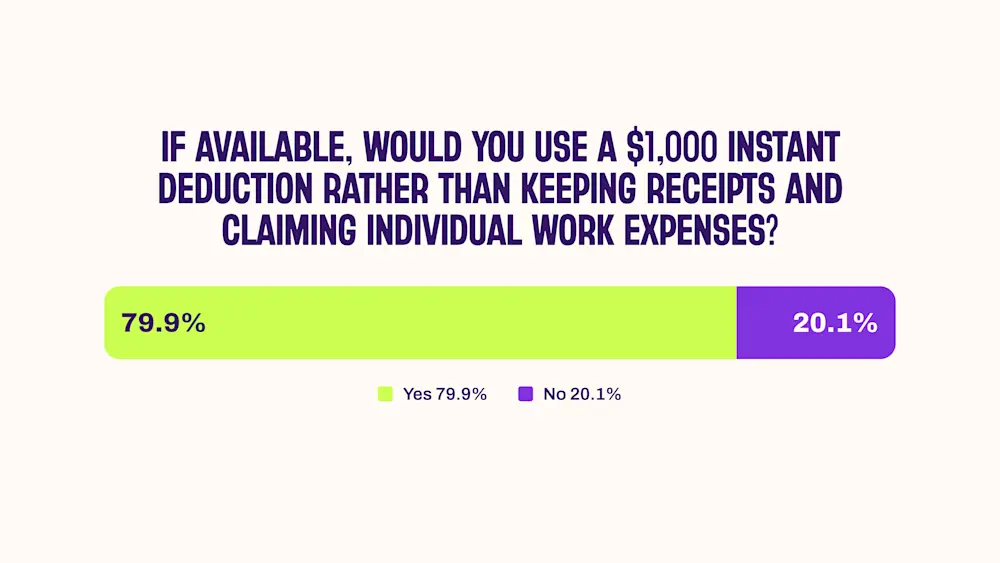
• Four in five Australians (80%) would choose a proposed $1,000 instant work-related deduction rather than keeping individual receipts.
• More than eight in ten Australians (85%) say rising household costs have made them more likely to review their major household bills.
• Only around one in three Australians have ever made additional superannuation contributions to reduce their tax bill.
AI is changing tax time, but trust remains the biggest hurdle
Artificial intelligence is quickly becoming part of everyday financial life, and tax time is no exception.
Compare Club’s research found that more than half of Australians have either already used AI or are considering using it to help answer tax questions or navigate their tax return. While only a small proportion have replaced professional advice with AI, many are using it as a research and educational tool.
Australians appear most comfortable using AI to understand tax deductions (36%), explain complex tax rules (35%) and estimate potential refunds (31%). Far fewer are comfortable allowing AI to complete their tax return, suggesting most still view the technology as a helpful assistant rather than a replacement for professional expertise.
At the same time, confidence in AI remains cautious. Accuracy is the biggest concern, followed by privacy, security and the possibility of making mistakes with the Australian Taxation Office.
Australians worry they are leaving money on the table
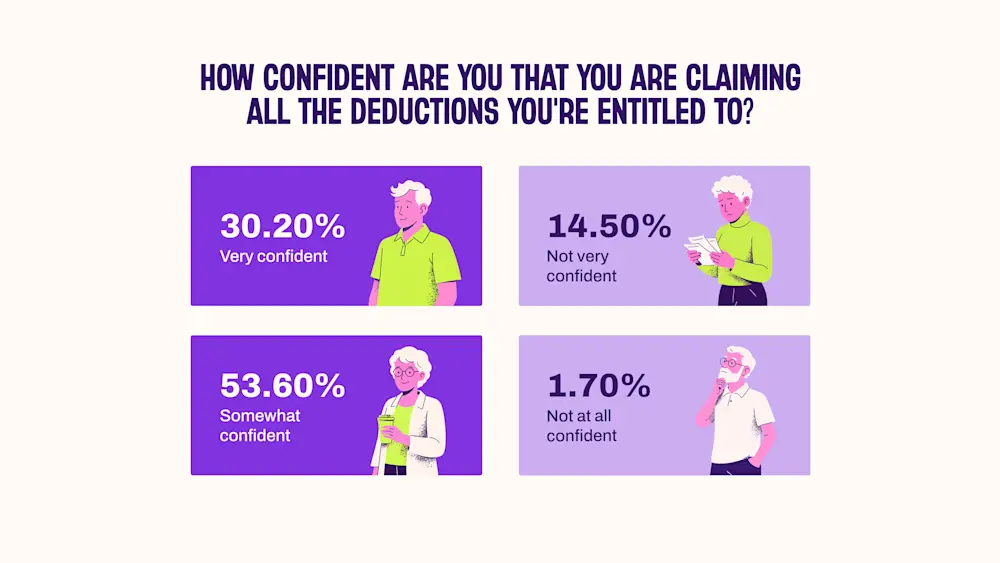
While most Australians are reasonably confident they understand their tax obligations, many remain concerned they are not claiming everything they are entitled to.
More than four in ten Australians believe they have previously missed tax deductions that they later realised they could have claimed. Among those respondents, many estimate those missed deductions have cost them hundreds or even thousands of dollars over the past five years.
The research suggests the biggest challenge is not record keeping, but awareness. Almost half of respondents who believed they had missed deductions said they simply did not know certain expenses were claimable. Others admitted they found it difficult to keep track of receipts or worried about claiming something incorrectly.
This uncertainty highlights the ongoing complexity many Australians experience during tax time, particularly as work arrangements become more flexible and deductible expenses continue to evolve.
Tax refunds are becoming an essential part of household budgets
For many households, tax refunds are no longer viewed as unexpected windfalls.
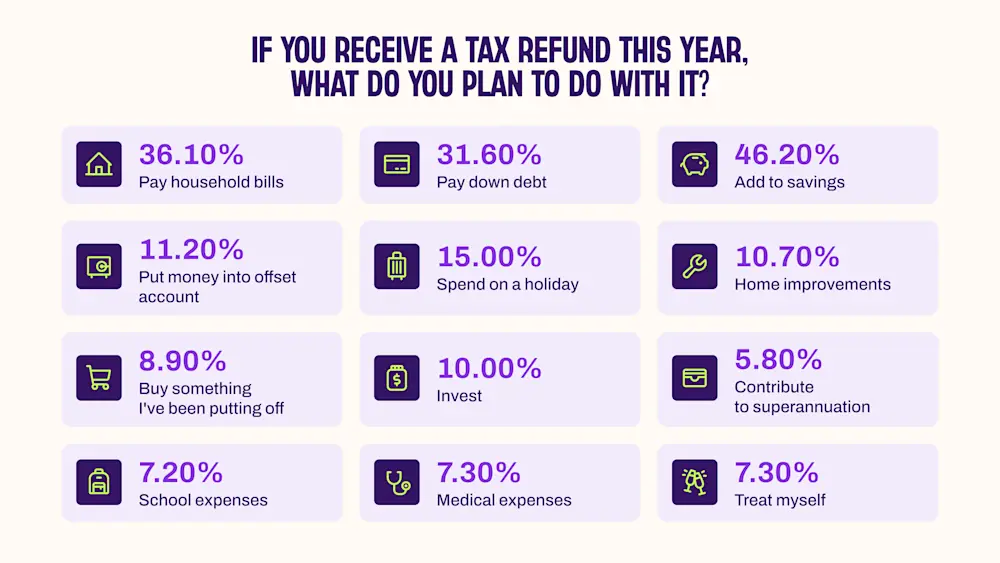
Almost half of Australians say their refund is essential to managing household finances this year, while a further 47% describe it as helpful. Only a small minority say it will have little impact on their financial position.
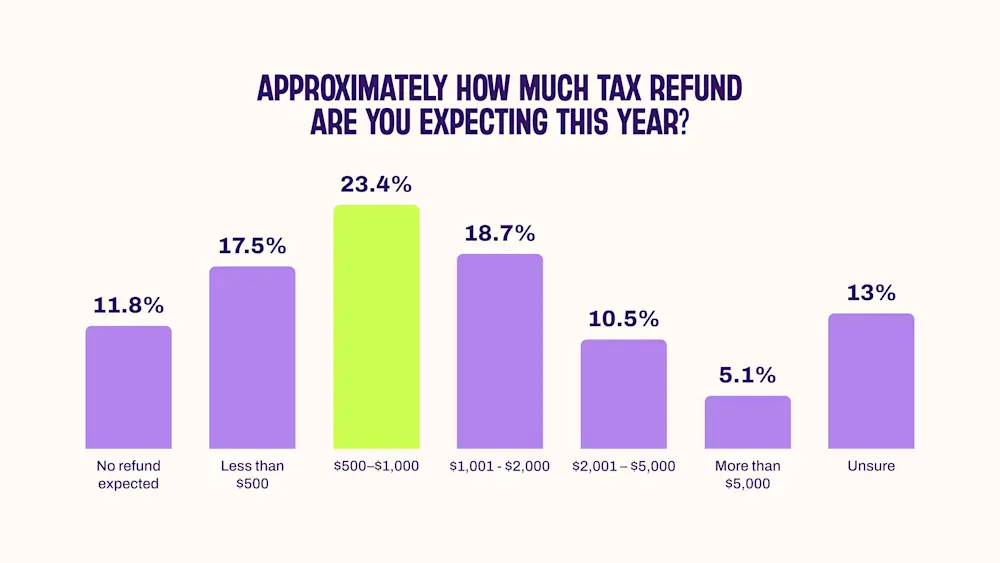
The research also shows many Australians have already mentally allocated their expected refund before it arrives.
Rather than spending refunds on discretionary purchases, respondents are prioritising financial stability. The most common intended uses include adding to savings, paying household bills and reducing debt. Others plan to place the money into mortgage offset accounts, invest or pay for upcoming holidays, school expenses or medical costs.
These findings reflect the continued pressure many households are experiencing after several years of elevated living costs.
The end of financial year (EOFY) has become Australia’s annual financial health check
The End of Financial Year is prompting Australians to look well beyond their tax return.
More than eight in ten respondents say rising household costs have made them more likely to review major household bills during the past year.
Health insurance, car insurance, mobile plans and energy providers were among the most commonly reviewed expenses. However, almost one in five Australians admitted they had not reviewed any major bills during the previous 12 months.
When asked which bills they believed they were most likely overpaying for, energy ranked highest, followed closely by health insurance. A significant proportion also admitted they simply did not know where they might be paying too much.
These findings suggest Australians recognise there may be opportunities to save money, but many remain uncertain about where those opportunities exist.
Simplicity and long-term planning remain opportunities
The proposed $1,000 instant work-related deduction attracted overwhelming support from respondents once it was explained, with four in five saying they would choose the simplified option over collecting individual receipts.
The findings suggest Australians are highly receptive to initiatives that reduce administrative complexity while still allowing them to receive legitimate tax benefits.
At the same time, the research highlights an opportunity to improve awareness of longer-term financial planning strategies.
Only around one in three Australians plan to make an additional voluntary superannuation contribution before the end of the financial year, and a similar proportion have ever made additional contributions specifically to reduce their tax bill.
While voluntary super contributions are not suitable for everyone, the findings indicate many Australians may be overlooking one of the few EOFY strategies that can potentially improve both their current tax position and their retirement savings.
Conclusion
The research demonstrates that tax time has evolved into something much broader than an annual compliance exercise.
Australians are increasingly using EOFY as a chance to review their financial position, explore new technologies, reassess household expenses and make informed decisions about the year ahead.
While confidence is growing in areas such as AI-assisted research and financial planning, uncertainty remains around tax deductions, household bills and longer-term strategies such as superannuation.
As cost-of-living pressures continue to shape household behaviour, EOFY is becoming an important financial reset for many Australians, providing an opportunity not only to lodge a tax return, but to take stock of their broader financial wellbeing.
Methodology
Compare Club commissioned an independent survey of 1,000 Australian adults aged 18 years and over. Fieldwork was conducted between 3 and 4 June 2026. Results are nationally representative by age, gender and location. Survey findings have been rounded where appropriate.


