



Time to read : 2 Minutes
And It's Up Again What The Reserve Bank S September Rate Hike Means For Homeowners
Australia's 3.3 million mortgage holders are braced for another round of interest rate rises after the Reserve Bank announced another hike in September.
💵 At .50%, it's the fifth cash rate increase in as many months, and bank economists are predicting it'll keep going up in 2022.
📈 Compare Club's home loans team estimate on an average mortgage of $600K homeowners are likely to be paying $748 more a month than back in April.
Compare Club's Co-CEO Lance Goodman:
"Our view is that rates will probably continue to rise into the end of this year and early next year, but hopefully not so aggressively as we've seen recently. Commentary from the RBA suggests that they still don't think that inflation is under control but they will need to balance the impact of rising living costs and recent interest rate rises, with the impact that'll have on consumer spending in months to come. It's going to be a tight juggling act."
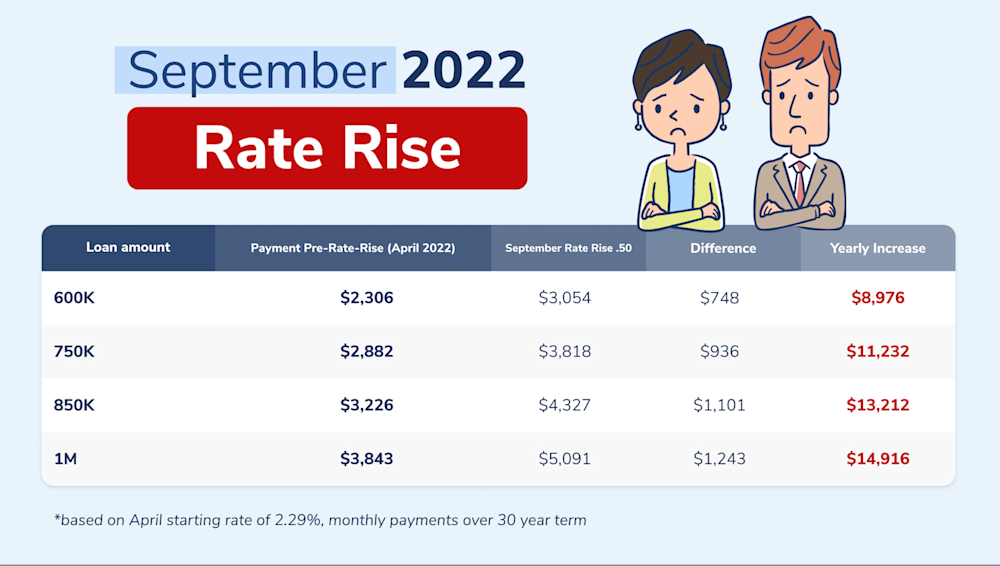
Reserve Bank increases: what you need to know
The Reserve Bank of Australia (RBA) is trying to stop inflation and slow the price rises for everyday cost of living, such as groceries, as well as bigger purchases like property.
The cost of living looks set to rise even with the RBA measures. Inflation to June was at 6.1% a long way from the 2-3% that the RBA is aiming for and they're forecasting it'll hit 7.75% by December this year.
Property values across all capital cities except Darwin are now dropping fast.
A drop in property values means that homeowners may have less equity in their home. That means it could be harder to use your property's value to fund items like renovations or purchasing an investment property.
But there is potential good news... "The RBA has indicated that they believe that interest rates will begin to stabilise early next year," Lance explains. "That has given a bit more confidence to the market, and we’ve seen some lenders start to cut their fixed rates on 3-5 year loans as a result."
New homeowners who have bought into the market in the last 12 months could become trapped in a loan that they can't refinance, due to the decrease in their property value.
It's still a buyers market but lenders have tightened the amount they're willing to lend. So some people may be priced out of the market.
For those who can switch lenders – and on average, at Compare Club we are cutting rates by 1.10% when people refinance – there are still better loans out there.
The bottom line
Mortgage pain is here for the foreseeable future.
Compare Club's home loan team's messaging remains the same though – if you are on a variable rate or a fixed rate that's about to expire then the quicker you can review your mortgage – and – the sooner you can get your mortgage repayments under control.
"Mortgage holders on a fixed rate should keep on top of their expiry date, and seek financial advice at least two to three months out from the expiry date to make sure their bank doesn't hike their rate up to an unreasonable level post expiry."
- Lance Goodman, co-CEO Compare Club.


